
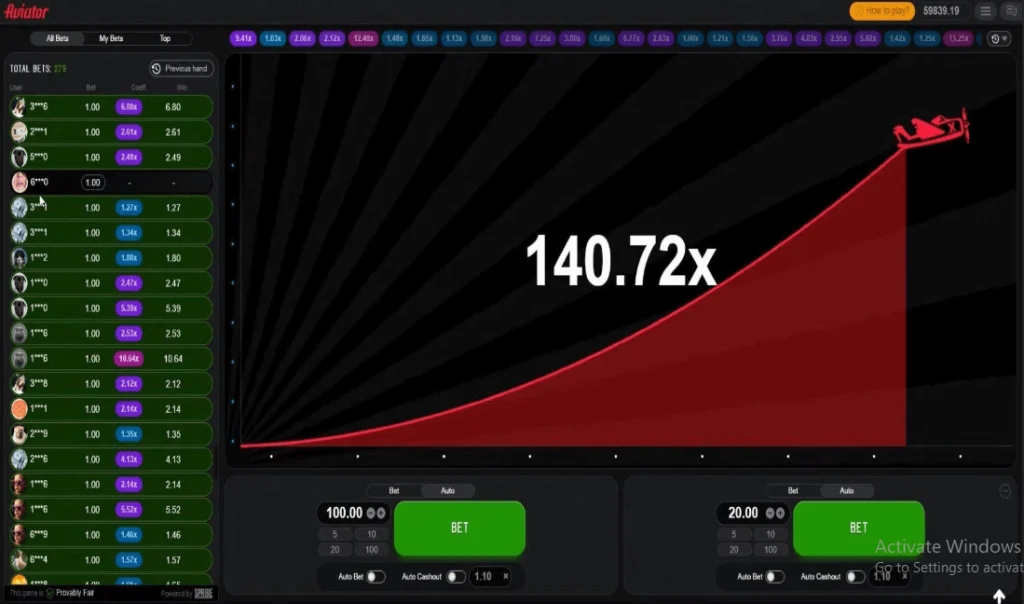
Having observed online gaming trends across Canada for some time, I see a particular kind of player sophistication around games like Aviator aviatorcasino.app. Occasional onlookers may overlook it, yet the block function has emerged as an essential component of tactics for numerous players in this region. This isn’t just a control to halt your betting. It is a strategic technique for dealing with risk and overseeing a play session. In a game ruled by a rising multiplier and an abrupt halt, the ability to determine your risk ahead of time is everything. Canada-based players, within a market that pushes responsible gaming, have incorporated this mechanism into their strategy. They never view it as an emergency brake pulled now and then. They treat it as a central element of their strategic plan. How they use it shows a disciplined focus on prolonging their gaming session, as opposed to going after a single dangerous payout.
How does the Block Function work?
The block function, also known as “Auto Cash Out” or “Limit Setting,” is a preventive feature. It allows a player to establish conditions that on their own manage their bets. In Aviator, it most often works by blocking bets from being set if specific things happen. This is different from an auto-cash-out, which guarantees a win. The block function halts a potential loss before it even starts. It acts as a gatekeeper for your money, intervening before a moment of impulse or frustration can make a bad choice. Consider it a set of rules you program for your future self—the self that might be overly bold after a win or desperate after a loss.
You can generally configure this function a few various ways. A player can block bets if their balance falls under a specific amount, safeguarding a financial cushion they decided on ahead of time. More strategically, they can prevent bets after a big win or a series of losses, compelling themselves to step away. The function works quietly in the background. Once you activate it and establish your parameters, it requires no more input during the tense moments of play. Its power is rooted in its pre-emptive nature. It’s a dedication to discipline made when you’re clear-headed, designed to protect you from yourself when that focus might fade.
Technical Implementation and Player Control
Technically, the limit function is a simple piece of logic built into the game client or account settings. The player types their criteria into a form field. Prior to placing a new bet, the software reviews the current game state against those conditions. If they’re met—say your balance is now $5 beneath your cap—the “Place Bet” button might grey out, or a message will pop up to stop the transaction. This built-in regulation is what renders it effective. The intervention is instant and absolute. You hand over control in advance to a sensible boundary, so you don’t have to rely on willpower in critical moments.
This level of user control marks a real shift in the design of crash games. It moves a portion of the burden from sheer willpower to a player-supporting system. For gaming providers, providing these tools matches responsible gambling objectives and helps players stay engaged in a positive manner. For the user, it alters the gameplay from a purely reactive experience to something more managed and strategic. The psychological upside is tangible. Knowing a predetermined limit is already set enables a player to savor the thrill of the game with more freedom, but solely within the limits they personally deem acceptable. It transforms a potentially disorderly activity and imposes well-defined limits.
Calculated Application of the Stop Function in Canada
Canadian players have embraced the stop feature and used it with a strategic finesse that echoes the nation’s larger, safety-conscious gaming scene. Their main goal is fund safeguarding. One tactic I’ve seen frequently is a layered blocking system. The initial stop kicks in when a session loss limit is triggered, maybe 20% of the starting bankroll. This is a alert. A subsequent, more rigid pause activates at a firm stop loss, perhaps 50% of the bankroll, which ends the session totally. This tiered approach creates a gradual stop before a total halt, akin to risk protocols in expert trading. It systematically blocks the common trap of “chasing losses,” where irrational decisions can make a tiny loss expand.
Canadian players also regularly utilize the block function to protect winnings and oblige themselves to take pauses. For instance, after a
- Loss Prevention: The simplest use. Players establish a block at a particular loss threshold (like $50) to shield their bankroll from vanishing during a poor run. This ensures they can rejoin and play another day.
- Profit Protection: After a major win, a block is activated to avoid re-betting all the profit. A common approach is to suspend further play until profits are withdrawn, or to set a higher balance floor that betting cannot go below.
- Emotional Pause: Blocks are applied after a large win or a disappointing loss, requiring a mandatory pause. This breaks the cycle of rash “revenge betting” or the overconfident belief in a “hot hand.”
- Session Timing: Utilized to maintain disciplined session lengths. A player might restrict bets after 20 rounds or 45 minutes of play, choosing sustained entertainment over lengthy, risky sessions.
- Wager Control: To prevent bet sizes from creeping up, a block can stop play if any individual bet surpasses a specified percentage of the bankroll. This enforces consistent money management.
Block Function and Responsible Gaming in Canada
The match between the block function and Canada’s responsible gaming framework is robust and deliberate. Provincial regulators and regulated platforms here highlight player protection tools. Features like the block function are a clear technical solution to that priority. They give the individual player a tangible, pre-emptive way to take care of themselves. In a regulatory environment that requires self-exclusion programs and deposit limits, the block function serves as a micro-level, session-specific companion to those broader tools. It gives detailed control right in the user’s hands. This aligns with the Canadian idea of personal responsibility backed up by system safeguards.
From a harm reduction view, the function is incredibly useful. It serves as a circuit breaker for problematic behavior before issues intensify. Letting players set limits based on their own financial and emotional triggers fosters a mindfulness that fast-paced games often destroy. Licensed operators in provinces like Ontario, overseen by AGCO rules, are encouraged to provide these features. Offering them isn’t just a bonus; it’s a signal a platform takes consumer safety seriously. For the Canadian player, using these tools is starting to be seen not as a weakness, but as the mark of a smart, sustainable way to engage in gaming.
A Tool for Conscious Entertainment
Ultimately, the block function transforms Aviator from a pure game of chance into an experience of conscious entertainment. It allows Canadian players experience the excitement of the crash mechanic while keeping a fundamental layer of personal security. This mindfulness is the reason the feature has gained traction. Players say they experience more in control and calmer during play, knowing the rules they defined earlier are actively protecting them from their own future excesses. The game becomes less about fighting temptation in the midst of the moment and focused on following a plan made in advance. That transformation is important. It transforms the experience from something that could be nerve-wracking into something built around managed excitement.
This method connects with a Canadian audience that is inclined to appreciate balance and moderation. The block function does not remove the risk or the fun. It just contains that fun inside boundaries you define yourself. It acknowledges that the game’s excitement comes from its volatility, but that appreciating it long-term means controlling that volatility. By utilizing this tool, players make a intentional choice. They choose to emphasize their enjoyment and financial well-being over the unrestrained hunt for one big score. It shows a advanced step forward in how interactive gaming is approached, moving away from reckless play and toward a more calculated, recreational model.
Side-by-Side Analysis: International vs. Canadian Market Usage
Around the world, usage of the block function is less uniform and often less organized. In various markets, players either ignore the feature or employ it primarily as a “panic button” after they’ve already lost a lot, making it a reactive instrument instead of a proactive one. Culture and regulation play a major part here. In places with weaker emphasis on formal responsible gaming tools, players may lean solely on personal discipline, which produces more erratic play patterns. They may regard the feature as an unneeded complexity, not a central part of the game.
The Canadian strategy is significantly more structured. A regulated marketplace with robust consumer protection standards has made using all available player protection tools normal. Players in Canada are more likely to establish multiple, multi-layered blocks right at the start of a session, as part of their regular routine. They also with greater frequency utilize the function to protect profits and schedule their sessions, not just to prevent losses. This points to a wider strategic perspective of the entire gaming session, almost like handling a small investment. A cultural inclination toward carefulness and planning, alongside prompts from licensed platforms, has established a unique “Canadian style” for the block function. It’s comprehensive, preventive, and embedded in their mindset of play.
Practical Guide to Configuring Your Blocks
Setting up an successful block strategy needs some consideration beforehand. First, ahead of you deposit or start playing, decide on your session bankroll. This is cash you are entirely comfortable losing. Your primary block should block bets once you’ve dropped 70-80% of this bankroll. Consider this as your “soft stop,” a signal you’re having a rough session. A secondary, hard block should be at 100% of your session bankroll. Next, establish what success looks like. Pick a profit goal, like a 50% gain. Once you reach it, establish a block to hold your balance from going down below your original bankroll. This allows you gamble with pure profit. Finally, account for time. Use a clock or the game’s own features to stop bets after 30-45 minutes, forcing a mental reset.
The crucial point is to set these blocks immediately after you deposit, or at the very start of your session, when you’re calm and objective. Do not alter these blocks in the middle of a session, especially after a loss or a big win. Your thinking won’t be at its sharpest then. The tool’s whole power comes from that pre-commitment. Handle your block settings as ironclad rules for that session. Later, assess how they worked. Did your loss limit feel too restrictive? Was your profit goal too ambitious? Fine-tune these parameters over time based on your experience, not your feelings in the moment. This method of refining and learning turns gambling from a random activity into a polished personal hobby with clear limits.
Mental Benefits and Sustained Play
Using the block function regularly has a major emotional impact. It relieves you of the persistent decision about when to stop, which is often the most difficult choice in gambling. By systematizing that, you free up mental energy to devote to the strategic decisions inside the game, like bet sizing and cash-out points. It also reduces regret after a session. Knowing you stopped because a sensible, pre-set rule was triggered is much simpler to live with than stopping because you were annoyed or exhausted. This fosters a more healthy relationship with the game, making you less likely to make an hasty, revenge-fueled deposit later on.
For long-term engagement, this is essential. Players who employ these controls report higher satisfaction and stick with gaming platforms longer. They escape the devastating losses that make people quit for good. So the block function isn’t just a protective tool for the player. It’s a retention tool for the operator. It supports a kind of recreational gaming that can persist. By cutting away the worst extremes, it holds the activity firmly in the territory of entertainment, not distress. For the Canadian market, where gaming is legally framed as a form of entertainment, this tool is perfectly designed to ensure the real experience matches that idea.
Final thoughts: The Block as a Strategic Imperative
Looking at how Canadians play Aviator brings me to one definite point. The block function has moved from a niche feature to a strategic must-have for thoughtful players. How it’s been utilized shows a developed gaming culture that values control, responsibility, and long-term fun over unchecked risk-taking. Canadian players have demonstrated that the true ability in a game like Aviator isn’t just in deciding your exit point. It’s in masterfully handling all the parameters of your session. The block function is the key feature for that management. It embodies a combination of entertainment and discipline, enabling the game’s thrill happen inside a secure, self-imposed frame.
Looking ahead, I expect this tool will get more sophisticated. We might see tailored insights or more intelligent, dynamic restrictions based on how you play. The principle behind it—that players are entitled to powerful, automatic features to enforce their own limits—will likely become a common requirement across all online gaming. For anyone playing Aviator or other crash-style games, especially in a regulated market like Canada, mastering the block function isn’t an optional expert move. It’s the essential first step toward a more intelligent, safer, and more fulfilling gaming experience. It’s the feature that clearly distinguishes a deliberate plan from just playing by chance.
Leave a Reply